Mortgage Websites & SEO
Mortgage SEO: How Loan Officers Can Rank Higher on Google and AI Search
A practical SEO plan for loan officers covering local visibility, page structure, content that earns trust and what actually matters for AI search features.
By Mortgage Site Pros Editorial Team · Published · Updated
Mortgage SEO for loan officers comes down to three things: make sure search engines can find and understand your site, publish pages that genuinely answer what borrowers in your markets ask, and build local trust signals such as a complete Google Business Profile and real reviews. There are no shortcuts that hold up, and nobody can guarantee a ranking position.
AI search has changed how answers appear, not what makes content worth showing. Google states in its documentation on AI features and your website that there are no additional requirements to appear in AI Overviews or AI Mode, and no special schema or AI text file is needed; the same SEO fundamentals apply. That is good news for loan officers willing to write genuinely useful local content.
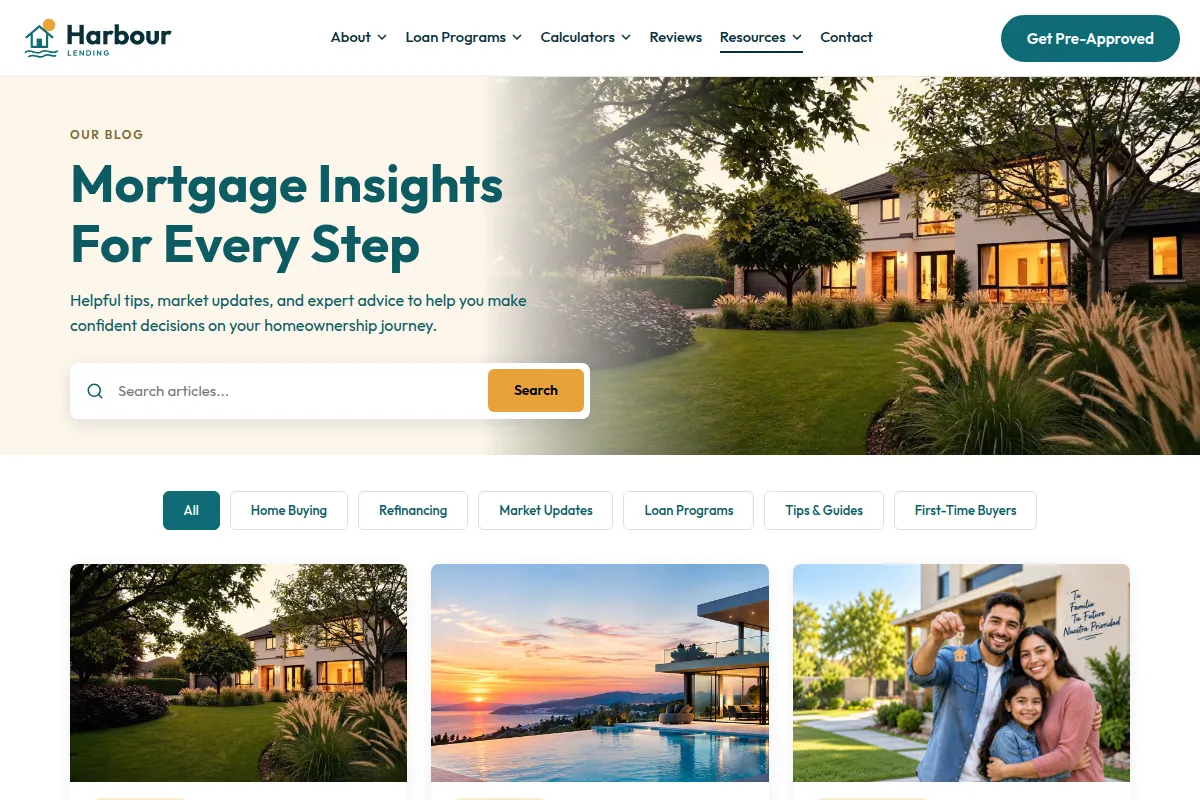
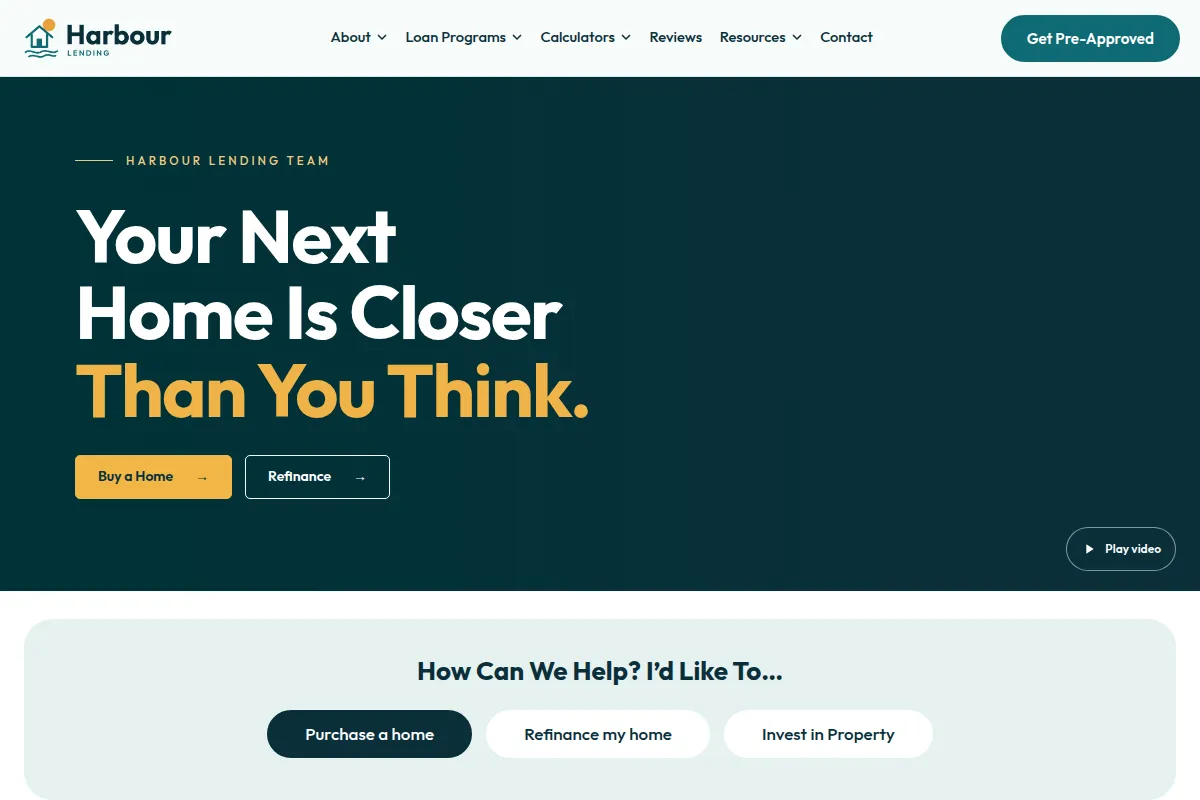
Your site design matters as a foundation; see what makes the best loan officer websites and how to choose a template. For how SEO fits your whole plan, read the complete loan officer marketing guide.
How do loan officers rank in search?
Search engines crawl pages, index what they understand, and rank results for each query based on relevance, quality and many other signals. Google’s SEO Starter Guide is the most reliable plain-language overview. For a loan officer, the practical translation is below.
| Layer | What it means for you | Example action |
|---|---|---|
| Crawlable and indexable | Pages can be found and read | Clean URLs, internal links, sitemap, no accidental noindex |
| Understandable | Each page has a clear topic | One H1, descriptive headings, specific titles |
| Helpful | Content answers a real question well | Local first-time buyer guide written from experience |
| Trustworthy | Visitors and search engines can verify you | NMLS info, real reviews, consistent business details |
| Local | You are relevant to nearby searchers | Google Business Profile, market pages |
Local SEO: Google Business Profile and consistency
For many borrower searches, the local results matter. A Google Business Profile, where your company allows one, should follow Google’s guidelines for representing your business: accurate name without keyword stuffing, correct category, real address or service area as eligible, and consistent phone and website.
Keep your name, company, phone and NMLS details consistent across your website, Business Profile, social profiles and directories. Inconsistency confuses both people and search engines.
- Ask satisfied clients for reviews through allowed platforms and respond professionally.
- Add photos of you, your team and your office.
- Post occasional updates linking to new articles.
- Do not create profiles at addresses where you do not actually serve customers.
On-page structure that search engines understand
Each page should target one topic. A program page about VA loans in your state should be about exactly that.
- Title tag: specific and readable, around 50 to 60 characters when practical, such as VA Loans in Colorado Springs | Your Name.
- Meta description: a short summary that earns the click; Google may rewrite it.
- One H1 describing the page, then H2 and H3 headings that follow logically.
- Descriptive URLs such as /va-loans-colorado-springs rather than /page-7.
- Image alt text that describes the image for people using screen readers.
- Internal links from related articles and program pages using descriptive anchor text.
Content that earns visibility
Google’s guidance on helpful, people-first content asks whether content demonstrates first-hand expertise and leaves readers satisfied. Loan officers have real experience; use it.
Topic ideas that work for loan officers
Start from questions you answer on the phone every week.
- What credit score do I need for an FHA loan, explained with your company’s actual guidelines and appropriate caveats.
- How much do I need for a down payment in your area, with local programs your company participates in.
- Self-employed borrower documentation explained.
- What happens between contract and closing with your team.
- County or city buying guides with real local knowledge.
Using AI responsibly
Google’s generative AI content guidance says AI can help create helpful content, but generating many pages without adding value to manipulate rankings violates spam policies. Use AI for outlines and editing; add your expertise and review for accuracy. See AI for mortgage loan officers.
What about AI Overviews, ChatGPT and Perplexity?
Google says pages shown in its AI features must be indexed and eligible to show a snippet, and the same best practices apply. Other AI assistants use their own systems, but well-structured, accurate, clearly sourced pages are easier for any system to understand.
Practical habits that help readers and machines alike:
- Answer the main question directly in the first paragraph of a section.
- Use descriptive headings phrased the way people ask.
- Define terms clearly.
- Cite primary sources for factual claims.
- Keep business details consistent everywhere.
- Use structured data only where it matches visible content; it does not guarantee rich results or AI citations.
Technical basics checklist
You do not need to be a developer, but confirm these with your web provider.
| Item | Why | How to check |
|---|---|---|
| XML sitemap | Helps discovery | Submitted in Google Search Console |
| Mobile-friendly | Most visits are on phones | Test on real devices |
| Page speed | User experience | Web Vitals reports |
| HTTPS | Security and trust | Padlock in browser |
| Canonical URLs | Avoid duplicate versions | View page source or ask your provider |
| No accidental noindex | Pages must be indexable | Search Console URL inspection |
Mortgage SEO mistakes to avoid
A few errors show up repeatedly on loan officer sites.
- Publishing near-identical city pages with only the town name swapped. These add little value and can be treated as low quality.
- Copying program descriptions from your company or another site instead of writing your own explanations.
- Stuffing keywords into Business Profile names, which conflicts with Google guidelines.
- Letting old articles go stale when programs or limits change.
- Blocking pages from indexing accidentally during a redesign.
- Buying links or joining link schemes, which violate search engine spam policies.
Example: improving one program page step by step
Abstract advice is easy to nod along to. Here is how a loan officer might improve a single thin page titled FHA Loans that currently lists four bullet points copied from a company flyer.
- Clarify the topic: retitle it FHA Loans in [County]: How They Work and Who Considers Them, and rewrite the H1 to match.
- Answer first: open with two sentences defining an FHA loan in plain language and who it commonly suits, with a note that eligibility depends on a full review.
- Add structure: H2 sections for how FHA differs from conventional loans, typical documentation, mortgage insurance basics and how your process works.
- Add local value: mention local down payment assistance programs your company actually participates in, verified with operations.
- Link internally: link to your first-time buyer guide, calculator and contact page with descriptive anchors.
- Add FAQs drawn from real borrower questions, written in your own words.
- Review: compliance checks program statements; then request indexing in Search Console and watch impressions over the following weeks.
A 90-day mortgage SEO plan
A realistic plan for a loan officer with a few hours a month.
- Month 1: verify Search Console, fix technical issues, complete Business Profile, rewrite titles and descriptions for main pages.
- Month 2: publish two local or program articles; add internal links from existing pages; request reviews.
- Month 3: publish two more; review Search Console queries to find questions you are almost answering; improve those pages.
- After 90 days, keep a steady cadence and refresh older articles when facts change.
Frequently asked questions
How long does mortgage SEO take?
Usually months, and it varies by market and competition. Technical fixes and Business Profile updates can help sooner; content builds over time. Anyone guaranteeing a timeline or position is overselling.
Do I need special schema to appear in AI Overviews?
No. Google states there are no special requirements or schema needed for AI features beyond standard SEO best practices. Structured data should only describe visible content.
Can I rank nationally as a loan officer?
It is difficult and usually unnecessary. Focus on the markets where you are licensed and active, where local knowledge gives you an edge.
Should I write my own blog posts?
Your expertise should be in them. You can use writers or AI for drafts, but review and add first-hand knowledge, and have compliance review where required.
What is the most important SEO task for loan officers?
Making sure your site clearly answers local borrower questions and that your business details are accurate and consistent. Technical basics come first, then helpful content.
Sources and further reading
- Google Search Central: AI features and your website
- Google Search Central: SEO Starter Guide
- Google Search Central: Creating helpful, reliable, people-first content
- Google Search Central: Guidance on using generative AI content
- Google Business Profile: Guidelines for representing your business
- web.dev: Web Vitals
Start with an SEO-ready mortgage website
Templates with clean structure, readable blogs and room for local pages. Explore the live previews.
Explore mortgage website templates